Medicaid Costs Are Exploding | Eastern NC Now

During the past year, North Carolinians have heard many things about Obamacare, Medicaid, and health care reform that turned out to be untrue.

ENCNow
    Publisher's note: This article appeared on John Hood's daily column in the Carolina Journal, which, because of Author / Publisher Hood, is linked to the John Locke Foundation.

    RALEIGH     During the past year, North Carolinians have heard many things about Obamacare, Medicaid, and health care reform that turned out to be untrue. For example:

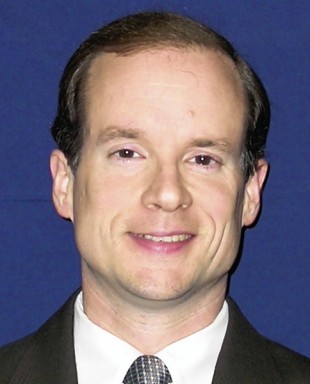
John Hood, President and Chairman of the John Locke Foundation.
  • North Carolinians were told that regardless of whether the state set up its own Obamacare exchange or allowed the federal government to do so, state government would have to fund the exchange's operating costs. This claim was false.
  • They were told that unless North Carolina accepted the Medicaid expansion authorized by Obamacare, some 500,000 North Carolinians would be shut out of subsidized health coverage and remain uninsured. This claim was grossly exaggerated, by as much as 350,000 people, by ignoring the existence of the Obamacare health exchange and using unrealistic estimates.
  • They were told that North Carolina's current contractor, Community Care of North Carolina, is keeping the state's Medicaid costs low. This claim was false. In reality, North Carolina's Medicaid costs are the highest in the South and among the highest in the United States.

    In the latter case, liberal politicians and activists opposed to the McCrory administration's Medicaid reforms have engaged in a bit of misdirection. Rather than truly comparing Medicaid spending across states, which doesn't make North Carolina look good, they compared the growth rates in Medicaid spending across states. Then they narrowed the focus to just a single three-year period, from FY 2007 to FY 2010, during which North Carolina's Medicaid costs grew at just 3.5 percent a year - the slowest growth rate in the country, according to the Kaiser Family Foundation.

    Here's the problem with their claim, however: we are now in 2013. The administration and state legislature are currently budgeting for 2014 and 2015. The fact that North Carolina had a single three-year period of relatively slow Medicaid growth tells us little about the longer-term trend, the most-recent trend, or the projected trend.

    Let's start with the longer-term trend. During the 1990s, North Carolina Medicaid had one of the fastest growth rates in the country, averaging 14 percent a year vs. the national average of 10.9 percent. North Carolina's annual growth rate continued to outpace the national average during the 2001-04 period (by four-tenths of a percentage point) and the 2004-07 period (by nearly two percentage points).

    Furthermore, from 2010 to 2012, the annual rate of growth in North Carolina Medicaid spending spiked up to 5.4 percent, according to data reported by Jonathan Ingram and Katherine Restrepo in a new John Locke Foundation report on Medicaid reform. While I'm not aware of any comparable state-by-state comparisons for the period, the Center for Medicare and Medicaid Services reports that national Medicaid spending rose by just 3.8 percent a year from 2010 to 2012, far below our state's growth rate.

    Finally, costs within North Carolina Medicaid have exploded in just the past few months. State lawmakers are now looking at hundreds of millions of dollars in Medicaid spending through June 30 beyond the amount originally budgeted, plus projections of rapid Medicaid inflation in 2013-14 and 2014-15.

    As a result, the Senate's budget plan calls for a 10.8 percent increase in Medicaid appropriations in 2013-14 and 4.9 percent increase (likely an underestimate) in 2014-15. That's an average annual growth rate of 7.9 percent over the next two years.

    So, to summarize, there was a brief period (2007-2010) when North Carolina's Medicaid growth was relatively low. This period was both preceded and followed by years in which North Carolina Medicaid grew faster than the national average, often by a large margin. And despite the fact that the Senate has included substantial Medicaid changes and cuts in its 2013-15 budget, the program's cost will still shoot up rapidly over the next two years.

    If, knowing these trends, you still try to claim that North Carolina has a low rate of Medicaid spending growth, you are misinforming the public. And if you don't know these trends, you probably shouldn't be commenting about North Carolina's Medicaid program.
Go Back


Leave a Guest Comment

Your Name or Alias
Your Email Address ( your email address will not be published )
Enter Your Comment ( text only please )


Senate Tax Compromise Cuts More Than Earlier Proposals Statewide, Government, State and Federal Legislature about to make a serious mistake with S 124


HbAD0

Latest State and Federal

Tax Day is a week away, and the reports are in: North Carolinians are winning big with record-setting tax returns thanks to President Trump and Republicans' Working Families Tax Cuts.
“It is a trust fund, a piece of the American economy for every child that they will be able to take out when they are 18.”
For most of her life, Zofia Cheeseman built her life and schedule around being a gymnast until a health scare forced her to look at her life off the mat.
"We could very well end up having a friendly takeover of Cuba."

HbAD1

You can't make this up. If you turned this script into Hollywood, they'd say it's too on the nose.
"Alaska native" firms, most often in Virginia, were paid $45 billion in Pentagon contracts thanks to DEI law.
Small cities rarely make headlines. Their struggles - fiscal mismanagement, leadership vacuums, the slow erosion of public trust - play out in school gymnasiums and wood-paneled council chambers, witnessed by a handful of residents and largely ignored by the world outside.
"Go that way and get down ... there has been a shooting ... there are people dead over here."
Former provost Chris Clemens has dropped his open meetings and public records lawsuit against the University of North Carolina at Chapel Hill.

HbAD2

How the Minnesota Senate race became a purity test for the far Left

HbAD3


Back to Top