Work Is What Works | Eastern NC Now

There are real-live North Carolinians, people in positions of authority or influence, who believe you can stimulate economic growth by paying people not to work.

ENCNow
   Publisher's note: The article below appeared in John Hood's daily column in his publication, the Carolina Journal, which, because of Author / Publisher Hood, is inextricably linked to the John Locke Foundation.

    RALEIGH     There are real-live North Carolinians, people in positions of authority or influence, who believe you can stimulate economic growth by paying people not to work.

    They are the liberal politicians, lobbyists, and pundits who contend that extended unemployment-insurance benefits strengthen the economy by propping up consumer demand. They are the liberals who defend North Carolina's expensive Medicaid program from necessary reforms by arguing that it circulates money through the state's hospitals and doctors' offices, and who advocate the expansion of Medicaid under Obamacare because it would route still more tax money through health care markets.

    The idea isn't new. It's
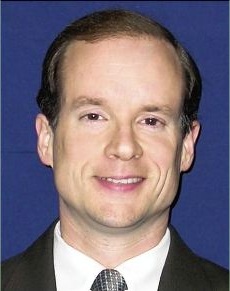
John Hood
warmed-over Keynesianism from the 1930s. It is a classic example of the broken-window fallacy - of seeing a rock thrown through a window as an economic blessing, because it results in a flurry of window-repair expenditures, rather than as an economic curse, because it breaks a perfectly good window.

    Politicians don't lead their communities to prosperity by making it easier for people who lose jobs to remain on public assistance in perpetuity. The UI system, for example, was intended to give those laid off without warning some time and space to find another job. It was never intended to supply cash assistance for people remaining unemployed for years at a time. Some of these recipients may have personal problems needing an entirely different kind of intervention. And many other recipients, particularly in states such as North Carolina with relatively generous benefit amounts and terms, pass up opportunities to take jobs - often, admittedly at lower pay than they would like - in hopes that things will be different next year.

    That's not the picture of a healthy labor market. You want to maximize the number of people working, supporting themselves, and paying taxes into the government's coffers. You shouldn't be constructing incentives for extending the length of unemployment spells.

    One of the most pernicious recent developments is the broadening of Social Security Disability Insurance. Created during the Eisenhower administration, SSDI was originally intended to provide supplemental assistance for U.S. workers who developed severe disabilities, making them unable to work at all, but were not yet old enough to receive retirement benefits. The program remained relatively small until 1984, when Congress rewrote the eligibility rules to make it easier for individuals to qualify. Instead of having to match up with a preapproved list of severely debilitating injuries or conditions, applicants would qualify if they had several less-severe conditions, or if their reported pain or discomfort was deemed serious enough.

    "Not surprisingly," writes John Merline in the magazine of the Federal Reserve Bank of Richmond, "more and more workers were awarded disability benefits based on ailments that relied more on patient self-reporting and that often were not easily diagnosed independently." The chances of getting on the SSDI rolls substantially improved. About a third of all SSDI applicants get approved within the first four months. Among those who are initially rejected, more than half appeal to the courts, where judges typically reverse 75 percent of the initial rejections.

    Thus we have 6.6 people on SSDI today for every 100 American workers, a disability rate twice as high as it was 20 years ago and three times what it was in 1972. Here's a telltale sign of abuse: There is a noticeable uptick in SSDI applications after individuals use up their maximum UI benefits. Essentially, they are using disability as another form of unemployment compensation. Add Medicare coverage to the monthly SSDI benefit, which now replaced an average of 86 percent of what lower-income recipients made while working, and you can see why the system breeds unwelcome, costly dependency.

    SSDI, UI, and other public assistance programs need immediate reform. Some need clear time limits. Others need firm job-search requirements and tighter eligibility requirements, so that those who can find employment will do so and the remaining caseload can be financed without more fiscal pressure on Washington and the states.

    Policymakers should focus on the supply side of the economy - on the public and private investment that makes work more productive, entrepreneurs more successful, and investors more likely to take risks - rather than fiddling around with stimulus tricks and dependency schemes.

    Hood is president of the John Locke Foundation and author of Our Best Foot Forward: An Investment Plan for North Carolina's Economic Recovery.
Go Back


Leave a Guest Comment

Your Name or Alias
Your Email Address ( your email address will not be published )
Enter Your Comment ( text only please )


Vidant Women's Care - Edenton joins Vidant Medical Group Outlying Politics, The Region, Neighboring Counties Immigration Committee Makes Few Recommendations


HbAD0

Latest Neighboring Counties

A North Carolina State Senate race is heading for a recount after the two pro-Trump Republicans come down to a two vote margin.
This is simply a failure of will, and we are here to help impose that will today, so that to me is the simple punchline," said State Treasurer Brad Briner. "I appreciate the leaders of Rocky Mount being here, but we need to get to a place where there is the will to fix a very, very serious problem.”
A federal judge will not issue an injunction blocking local Watauga County election districts created by the Republican-led North Carolina General Assembly.
The FBI has captured Alejandro “Alex” Rosales Castillo, who is on the 10 Most Wanted Fugitive list and wanted in connection with a 2016 murder in Charlotte.
A major redevelopment project planned in Morehead City has been scrapped following strong public opposition over the use of eminent domain.
In the coming months, the North Carolina Supreme Court will decide whether a class-action lawsuit can move forward against Raleigh over water and sewer impact fees.

HbAD1

Former congressman Wiley Nickel made his candidacy for the office of Wake County district attorney official this week, with his Tuesday announcement.
Groups representing North Carolina's travel and tourism industry support a lawsuit against Currituck County at the North Carolina Supreme Court.
Plaintiffs in a $16 million class-action lawsuit against Raleigh challenged the city's legal tactics in a new state Supreme Court filing.
Charlotte-Mecklenburg Schools is asking the North Carolina Supreme Court to overturn a lower court order that would force the school system to pay into a retirement fund for campus police.
Members of the North Carolina Rural Health Association (NCRHA) visited Washington, D.C., on Feb. 14, 2024, to meet with elected officials and advocate for policies to improve access to care in rural areas.

HbAD2

The US Supreme Court will not take the case of Virginia-based owners of a Dare County beach home who challenged the county's COVID-related shutdown in 2020.

HbAD3


Back to Top