Navigation
- Governing Beaufort County (39)
- Beaufort County Agendas of General Meetings (10)
- Beaufort County Board of Education (2)
- Hearth and Home (6)
- "Good in the Kitchen" (6)
- It's Personal (2)
- Local Business (9)
- Movie Reviews (64)
- DVD Reviews (22)
- Film Reviews (12)
- Forgotten Classics (26)
- Op-Ed (43)
- A Commissioner's View (14)
- A Legal Perspective (1)
- Fire in the Hole (12)
- Out of Left Field (9)
- The Answer is Freedom (3)
- Wake Up World (1)
- Well Considered (2)
- Potpourri (2)
- School News (38)
- Beaufort County Community College (6)
- Beaufort County Schools (1)
- Teacher's Desk (31)
- The Arts (27)
- A Discussion of the Visual Arts and Graphics (4)
- Art Galleries and Special Exhibits (5)
- Music Reviews (9)
- Upon the Stage (3)
- The Region (14)
- Visiting Writers (14)
- Your Economy (10)
Search
Account
Who's Online
We have 6 guests online.
Related Links
Archive
- September 2010 (30)
- August 2010 (53)
- July 2010 (54)
- June 2010 (36)
- May 2010 (38)
- April 2010 (26)
- March 2010 (30)
- February 2010 (54)
- January 2010 (29)
- December 2009 (22)
- November 2009 (28)
- October 2009 (34)
- September 2009 (23)
Sponsored Ads
Other Nows
Sponsored Ads
Related Services
Museums in Review: Part II
Author: Wyatt Sanderman Day | Published: October 4th, 2009
The Franklin G. Burroughs and Simeon B. Chapin Art Museum Features the Story Painter: E. B. Lewis
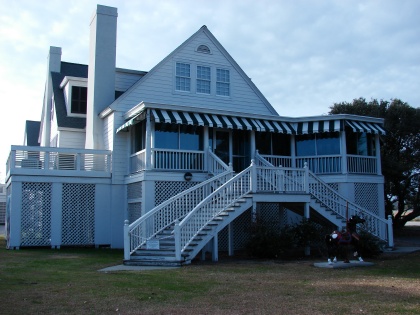
Every time I vacation in Myrtle Beach, South Carolina, I visit the Burroughs and Chapin Art Museum on Ocean Boulevard near the Farrow Parkway intersection with Kings Highway (US Hwy. 17
Business). The little museum, with its back facing the blue of the Atlantic Ocean, on every sunny day, often has a worthwhile show of some talented artist that is of local or regional renown.
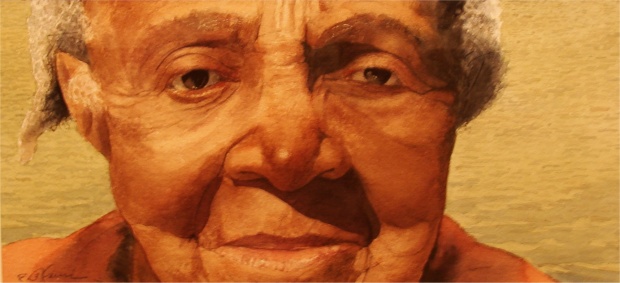
On my latest visit, I had the pleasure of viewing the works of E.B. Lewis, who describes himself as an Artistrator, in the museum’s Story Painter exhibit.. I was intrigued because his use of watercolor as the medium to present his subjects, mostly illustrations of books about African Americans and illustrations of poems about the vitality of rivers in the lives of Negroes in African American Langston Hughes’
The Negro Speaks of Rivers.
Mr. Lewis’ watercolors as illustrations of The Negro Speaks of Rivers are as free a flowing wash as the rivers that Mr. Hughes speaks of. And like Hughes lyrical dissertations capturing the textural mood of these free flowing arteries traversing the United States, and in particular the South, Mr. Lewis’ watercolors also capture the rivers’ flowing form in the glory of the familiarity of constant energy.
Mr. Lewis’ textural energy resulting from his rich choice of colors in their pleasing forms in his water colors is a continuation of who he is as well as who we all are: The children of the maternal fresh waters of our eternal rivers. I believe this is why I enjoy water colors so much. We, humans, have a body mass that is over 65% water, the Earth is over 65% water, we eat what lives in the water, we cannot exist without water in our diet and we need water to feed the soul.
Some folks are sailors, I need rivers and watercolor. E. B. Lewis is more than qualified as an watercolorist to quench my thirst for the medium. Like any good watercolor artist, Mr. Lewis uses his wash to set the tone of his work, and then works in a few
layers of thicker washes, scalable in tone, to give his paintings the necessary dept so they might convey some sense of perspective, and finishes them off with paint of a much thicker consistency, probably resembling a mucous of as a less dry “dry brush,” which projects the perspective of reality, and breathes life into his rendered world.
Sounds complicated? Watercolor is complicated if you are any good. Many self-proclaimed artist would never attempt watercolor as a finished medium. E.B. Lewis does this and he heightens the effect of his art by discussing subjects that are important to himself. Art is communication, and whether one understands or appreciates Mr. Lewis’ message; he is laying it out there in a medium that he is quite competent in - watercolor.
The subjects hanging in the B & C Art Museum are: the human toll of slavery, predominately as shown within Lewis’ work, during the 19th century in the United States of America. Besides the inhuman treatment of people within the context of slavery, the liberating exhilaration of freedom, shown within these illustrations from the book, I Want to be Free.
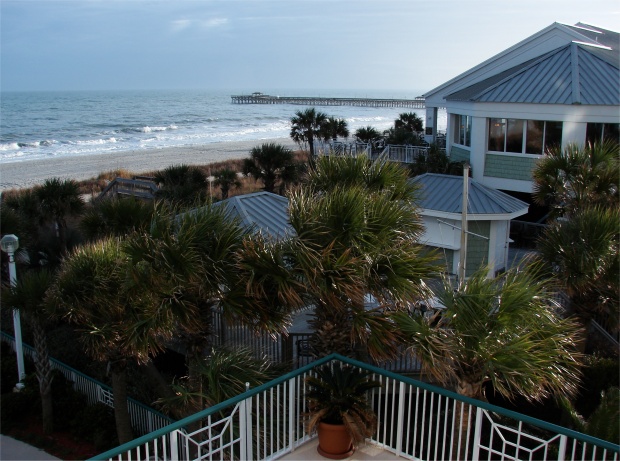
And that’s the way it is with The Franklin G. Burrows and Simeon B. Chapin Art Museum in Myrtle Beach: It is often hit rather miss in their galleries when they show the work of the many regional artists. The museum boasts intimate, though spatially arranged, galleries that concentrate on showcasing of the artist, not the museum; however, from the rear enclosed porch one has an outstanding view of the Atlantic Ocean. Also the museum offers its guests free hot specialty teas, and on occasion, cookies.
The museum is free of charge, but accepts donations, and has a gift shop that offers prints of the featured artists. My suggestion: Make the B & C Museum a destination when visiting Myrtle Beach. You may have the pleasure of seeing an artist of E. B. Lewis’ stature.
This article provided courtesy of our sister site: Better Angels Now.
Every time I vacation in Myrtle Beach, South Carolina, I visit the Burroughs and Chapin Art Museum on Ocean Boulevard near the Farrow Parkway intersection with Kings Highway (US Hwy. 17
Business). The little museum, with its back facing the blue of the Atlantic Ocean, on every sunny day, often has a worthwhile show of some talented artist that is of local or regional renown.
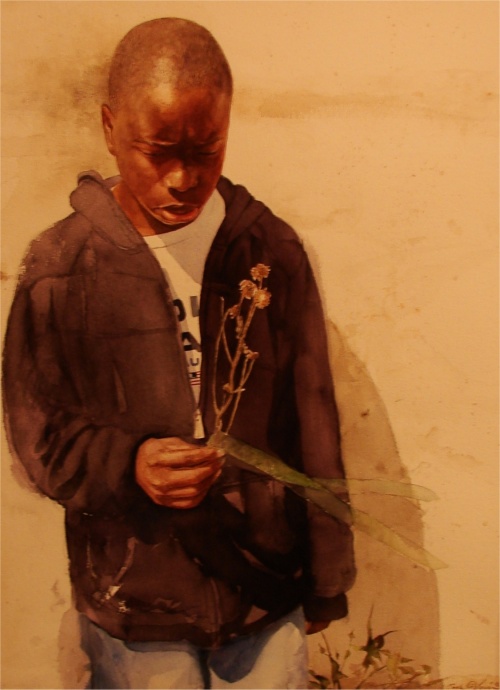
On my latest visit, I had the pleasure of viewing the works of E.B. Lewis, who describes himself as an Artistrator, in the museum’s Story Painter exhibit.. I was intrigued because his use of watercolor as the medium to present his subjects, mostly illustrations of books about African Americans and illustrations of poems about the vitality of rivers in the lives of Negroes in African American Langston Hughes’
The Negro Speaks of Rivers.
Mr. Lewis’ watercolors as illustrations of The Negro Speaks of Rivers are as free a flowing wash as the rivers that Mr. Hughes speaks of. And like Hughes lyrical dissertations capturing the textural mood of these free flowing arteries traversing the United States, and in particular the South, Mr. Lewis’ watercolors also capture the rivers’ flowing form in the glory of the familiarity of constant energy.
Mr. Lewis’ textural energy resulting from his rich choice of colors in their pleasing forms in his water colors is a continuation of who he is as well as who we all are: The children of the maternal fresh waters of our eternal rivers. I believe this is why I enjoy water colors so much. We, humans, have a body mass that is over 65% water, the Earth is over 65% water, we eat what lives in the water, we cannot exist without water in our diet and we need water to feed the soul.
Some folks are sailors, I need rivers and watercolor. E. B. Lewis is more than qualified as an watercolorist to quench my thirst for the medium. Like any good watercolor artist, Mr. Lewis uses his wash to set the tone of his work, and then works in a few
layers of thicker washes, scalable in tone, to give his paintings the necessary dept so they might convey some sense of perspective, and finishes them off with paint of a much thicker consistency, probably resembling a mucous of as a less dry “dry brush,” which projects the perspective of reality, and breathes life into his rendered world.
Sounds complicated? Watercolor is complicated if you are any good. Many self-proclaimed artist would never attempt watercolor as a finished medium. E.B. Lewis does this and he heightens the effect of his art by discussing subjects that are important to himself. Art is communication, and whether one understands or appreciates Mr. Lewis’ message; he is laying it out there in a medium that he is quite competent in - watercolor.
The subjects hanging in the B & C Art Museum are: the human toll of slavery, predominately as shown within Lewis’ work, during the 19th century in the United States of America. Besides the inhuman treatment of people within the context of slavery, the liberating exhilaration of freedom, shown within these illustrations from the book, I Want to be Free.
And that’s the way it is with The Franklin G. Burrows and Simeon B. Chapin Art Museum in Myrtle Beach: It is often hit rather miss in their galleries when they show the work of the many regional artists. The museum boasts intimate, though spatially arranged, galleries that concentrate on showcasing of the artist, not the museum; however, from the rear enclosed porch one has an outstanding view of the Atlantic Ocean. Also the museum offers its guests free hot specialty teas, and on occasion, cookies.
The museum is free of charge, but accepts donations, and has a gift shop that offers prints of the featured artists. My suggestion: Make the B & C Museum a destination when visiting Myrtle Beach. You may have the pleasure of seeing an artist of E. B. Lewis’ stature.
This article provided courtesy of our sister site: Better Angels Now.
|
*You must be logged in in order to leave a comment! |